


Intergenerational Mobilities: Spatio-temporal and cultural intersections in ageing societies
Intergenerational Mobilities: Spatio-temporal and cultural intersections in ageing societies
“Mobilities” DiSSGeA Department Development Project (PSD 2025-2027)
Rapidly ageing societies face unprecedented challenges in shaping relationships within and between generations. Three phenomena characterize Italian society in the era of the so-called ‘demographic winter’: 1- population decline (4 million fewer Italians by 2050); 2- ageing population (the proportion of elderly people (aged 65+) will rise from the current 24.3% to 34.6% in 2050); 3- an increase in the percentage of the population with a migrant background and a consequent increase in cultural diversity. The last dimension is particularly sensitive: migration will be essential for the stability of the Italian social, territorial and economic system, but there is not enough awareness of its value, and indeed there is widespread opposition within public opinion. As suggested by anthropologist Tim Ingold in the 2023 book ‘The Rise and Fall of Generation Now’, intergenerational relations can open a window for social dialogue, including intercultural dialogue. All these pressures set in motion dynamics of profound change, both spatial and cultural. Among these significant changes, those that will affect intergenerational relationships appear to be among the most relevant.
From many points of view, mobility is key to interpreting the reshaping of intergenerational relationships. In the more immediate dimension of physical mobility, the ageing of the population requires the adaptation of mobility infrastructure and modes of access to it. Pedestrian walkways, light mobility routes, public transport means, outdoor sport facilities are places where generations and their bodies meet and potentially clash. Forms of discrimination in access can affect both younger segments of the population (think of ‘child-free’ hotels and restaurants) and older segments (think of micromobility devices such as e-scooters, which are often associated with younger people). How and where can members of different generations meet? In many ways, it seems that we are moving towards a society of age-segregated spaces: play areas for children with restricted access; retirement homes for the elderly, which are unattractive to young people.
But this is only the first layer of mobility involved. Forms of intergenerational mobility also concern knowledge and memories. The rapid pace of technological change has undermined the authority of older people’s knowledge: it is the younger generations who teach their grandparents how to use new technologies. Technologies, on the other hand, can facilitate the elderly’s mobility and autonomy, allowing them to maintain active roles in society. At the same time, memory, in today’s fast-paced society, is even more precious and sought after: ‘once upon a time’ is evanescent and yet essential in reconstructing the thread of generational transitions, especially in an era of global changes. Even objects participate in this mobility: the death of elderly relatives becomes a crucial moment in the transition of both inheritance and the emotional sphere linked to objects. What will be saved and what will be thrown away?
Another dimension of mobility brought into play by the pressures mentioned above is intercultural mobility: the growth of the population with a migrant background implies a multiplication of different sensibilities, including about ageing and the role of different generations in the public domain. How will the intergenerational approach change in an increasingly multicultural society? Interconnected with the last two dimensions of meaning is the issue of collective memories and heritage and their role in the construction of complex cultural identities, starting from the assumption that heritage is a re-elaboration for current purposes of what we inherit from the past and put into play for present and future generations; questions arise concerning the ways in which heritage is mobilised through narratives, educational systems and tourism practices and how intergenerational dialogue is either strengthened or weakened through them.
National partnership
On these issues, the SOCIETY OF GEOGRAPHICAL STUDIES base in Florence (SSG), in collaboration with geographers from DiSSGeA and Dicea departments at UniPd, will organise a scientific event (Giornata di studio) in June 2027 entitled “Geography and Generations”. The aim is to focus, for the first time–in this field of study in Italy and with this attention and awareness of the rapidly changing demographic and cultural landscape– , on the various aspects of the ‘generational issue’, including social mobility, intergenerational justice, the abandonment of marginal areas, and the impact on the form and uses of cities.
International partnership
Thanks to the relationships established by the MoHu Centre, there will also be an opportunity to carry out a highly relevant comparative analysis with another society characterised by rapid population ageing, such as South Korea. Moreover, how Korean society weaves respect for the elderly into the fabric of daily life, blending traditional values with modern interpretations of aging makes this collaboration particularly interesting. Dialogue with South Korean colleagues from the ACADEMY OF MOBILITY HUMANITIES OF THE KONKUK UNIVERSITY in Seoul will highlight the similarities and differences between the two socio-territorial contexts, hopefully laying the foundations for a broader picture in which to situate intergenerational mobility processes
DISSGEA participants
Andrea Pase
Benedetta Castiglioni
Mauro Varotto
Dario Nardini
Fabio De Lorenzo Smit, PhD student
Beatrice Negro, PhD student
Tanja Kremenic, postdoc
EXTERNAL participants
Jinhyoung Lee, Academy of Mobility Humanities at Konkuk University
Gianpiero Dalla Zuanna, Dipartimento di Scienze Statistiche, University of Padua
Massimo De Marchi, Dicea, University of Padua
Andrea Pase
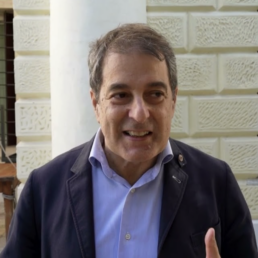
Benedetta Castiglioni
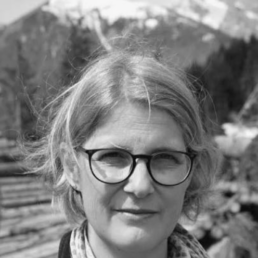
Mauro Varotto
Dario Nardini
Fabio De Lorenzo Smit, PhD student

Beatrice Negro, PhD student
Tanja Kremenic, postdoc

The Late Antique and Medieval Reception of Aristotle’s Categories “Mobilities” DiSSGeA Department Development Project (PSD 2025-2027)
The Late Antique and Medieval Reception of Aristotle’s Categories
“Mobilities” DiSSGeA Department Development Project (PSD 2025-2027)
Aristotle’s Categories stands as a fundamental text in the history of philosophical thought, offering a conceptual framework for classifying and understanding reality. From Late Antiquity through the Syriac, Arabic, Byzantine, and Latin Middle Ages, the Categories became a cornerstone in philosophical and medical education, shaping the teaching of logic, metaphysics, theology, medicine, and the natural sciences, across a wide range of linguistic and religious traditions.
The role of the Categories as a propaedeutic to rational thought, combined with its remarkable ability to spark debate and reinterpretation across the centuries, languages, and cultures, makes it a paradigmatic case study in the transmission of texts. The text represent an indispensable reference point for scholars across disciplines and for understanding the evolution of both philosophical and scientific thought.
Research into the reception of Aristotle’s Categories in Late Antiquity and in the Middle Ages is a rich and complex field, engaging both philological and philosophical perspectives. This project examines the transmission, circulation, and interpretation of this seminal work through its translations into Greek, Syriac, Arabic, and Latin, highlighting interpretive divergences and cross-cultural influences. By adopting a comparative and diachronic approach, the project aims to shed new light on the pivotal role of the Categories in the transmission of the Aristotelian heritage across East and West.
This project holds particular significance for mobility studies, as it traces the dynamic movement of a key philosophical text across geographical, linguistic, and cultural boundaries over more than a millennium. The Categories did not travel as a static object: each translation and reinterpretation reflects the intellectual and institutional contexts of the communities that received and reshaped them — from Greek Neoplatonists to Syriac scholars, from Arabic philosophers to Latin medieval thinkers. Studying this trajectory offers a concrete model for understanding how knowledge circulates, transforms, and adapts as it crosses borders, making the Categories an exemplary case for anyone interested in the mobility of ideas, texts, and scholarly traditions.
The project has engaged a genuinely interdisciplinary team within DiSSGeA — spanning History of Medieval Philosophy, History of Christianity, and Classical Philology — and has involved scholars at different career stages, from a Full Professor and an Associate Professor to a tenure-track Researcher, a Marie Curie Global Fellowship awardee, and a PhD student.
Main Activities:
- Organisation of a scientific event in Padua (28–30 September 2026): A three-day workshop aimed at young Italian and European doctoral students whose research intersects with the long and wide-ranging history of the circulation of the Categories. Invited scholars and DISSGEA members will present the Greek tradition of the text and trace the impact of Syriac, Arabic, and Latin translations on the development of philosophical and theological thought across different cultural and religious contexts. The workshop will also identify continuities and discontinuities in the reception of the Categories across traditions.
- Publication of a monographic volume: The contributions presented at the three-day workshop will be collected and edited into a peer-reviewed monographic volume. The volume aims to offer a comprehensive and up-to-date scholarly resource on the transmission and reception of the Categories across languages, cultures, and centuries. By bringing together specialists from different disciplines — including philosophy, philology, and religious studies — the volume will provide a multifaceted perspective on the Aristotelian heritage and its mobility across East and West. It is intended to become a reference work both for established scholars and for early-career researchers approaching this field of study.
PI: Cecilia Martini (DiSSGeA)
Other Members:
Marco Zambon (DiSSGeA)
Ciro Giacomelli (DiSSGeA)
Giovanni Mandolino (MSCA-GF DiSSGeA )
Simona Esposito (Dottoranda in Filosofia, Unipd)
External Participants & Partnerships:
Giovanni Catapano (FiSPPA)
Enrico Moro (FiSSPA)
Rita Salis (FiSPPA)
Cristina D’Ancona (Università di Pisa),
Riccardo Chiaradonna (Università Roma3)
Philippe Hoffmann (Ecole Pratique des Hautes Etudes Paris)
Christophe Erismann (Università di Vienna)
Silvia Di Vincenzo (Università Ca’ Foscari Venezia)
Caterina Tarlazzi (Università Ca’ Foscari Venezia)
Julie Brumberg-Chaumont (Centre National de la Recherche Scientifique Paris)
Centro Interuniversitario GrAL (Greco, Arabo, Latino) – University of Padova, the University of Pisa, the École Pratique des Hautes Études of Paris, and the Université Sidi Mohamed Ben Abdellah of Fès (Morocco). GrAL’ s activities are devoted to the study of the transmission of philosophical texts from Late Antiquity to the Arabic and Christian Middle Ages. The Centre is specialized in training activities for Doctoral and Graduate Students since 2006 (https://gral.unipi.it/)
Centro interdipartimentale di Filosofia Medievale (CIRFiM) – University of Padova. CiRFiM mission are: (a) to promote and coordinate research activities relating to medieval thought in all its various forms of expression; (b) to facilitate communication, integration, and the development of knowledge among scholars working in different scientific fields; (c) to acquire and manage resources outside the university system in order to support research on topics of interest to CIRFIM.
Department of Philosophy, Sociology, Education and Applied Psychology (FiSPPA, Unipd)
Doctoral School in Philosophy (Unipd).
Cecilia Martini
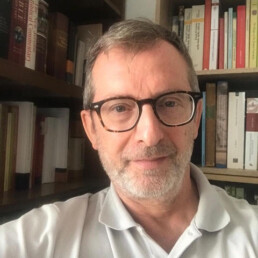
Marco Zambon (DiSSGeA)
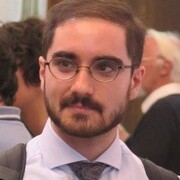
Ciro Giacomelli (DiSSGeA)
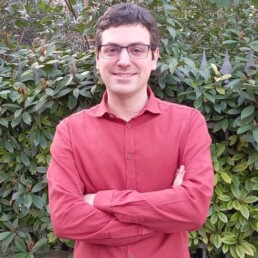
Giovanni Mandolino (MSCA-GF DiSSGeA)
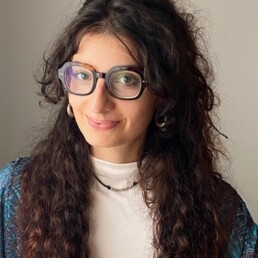
Simona Esposito (Dottoranda in Filosofia, Unipd)